Charlie
Hide and SeekCharlie is a nineteen-year-old second-year student at the University of Edinburgh whose attraction to occult study and life in Pilmuir place him between university respectability and the city’s poorer, more precarious spaces. Drawn into the investigation of Ronnie McGrath’s death, he becomes both a suspect and a source of evidence: he was at the house on the night of the overdose, later admits taking Ronnie’s camera, and is implicated in the additions to a pentagram at the scene. Rebus’s deductions ultimately suggest that Charlie arrived while the person who moved Ronnie’s body was still inside, making his presence consequential without establishing him as that person.
Identity and Background
The university lecturer Poole can identify the occult-minded student only by the first name he uses. He recalls an unusually long and knowledgeable essay on the occult and says the student wants to undertake a summer project on demonism. Poole first calls him Charles, then corrects this to Charlie; his surname eludes him. The exchange introduces a young man known through a chosen or familiar first name rather than a complete academic identity, a small uncertainty that fits the shifting social roles Rebus later observes.
Charlie is in his second year at university and is nineteen. His earlier schooling was shaped by books, music, preparatory work, essay-writing, and introspection; his boarding school had no pinball machines. University brings him into contact with pleasures and experiences that had been absent from that adolescence. The narrative presents this background not as a full account of his family life, but as a contrast between a contained, bookish youth and the more varied life he now tries to enter.
Life Between University and Pilmuir
Pinball offers Charlie a vivid measure of that attempted expansion. At the machine, he plays with fierce concentration, pausing to drink lager before returning his fingers to the buttons. The game represents an experience he missed at boarding school and now pursues with an intensity that reflects his desire to fit several lives into one. Rebus approaches him there, calling his name; Charlie turns at the sound, then turns back too late to avoid the serious, unsmiling inspector.
Rebus describes Charlie’s presence in Pilmuir as that of a tourist, aligning him with outsiders who enter poorer areas for excitement. Charlie rejects the label angrily. He insists that he was there because he wanted to be there, that the people there wanted him, and that he belonged. Rebus counters that he belongs in a large house with parents concerned about his university career. The exchange exposes a class boundary neither man treats as abstract: Charlie claims attachment to Pilmuir, while Rebus reads his student background as evidence that he can leave it behind. The disagreement remains unresolved, but Charlie’s insistence makes clear that he resists being reduced to an outsider seeking entertainment.
The Investigation and Its Evidence
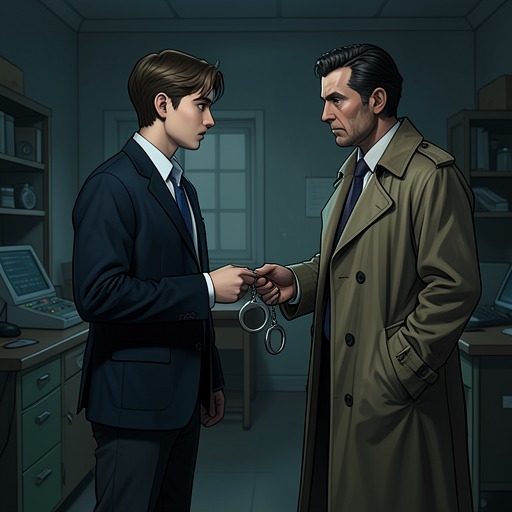
Rebus questions Charlie about the night of the overdose. Charlie confirms that he was in Ronnie’s house for a while, establishing a direct connection to the central event without, by itself, explaining what he saw or did there. When Rebus raises the pentagram and notes that someone had added to it after the photographs were taken, Charlie says nothing and does not appear surprised. His silence and expression make him a focus of suspicion, but the exchange stops short of a confession about the markings.
Later, at Matthew Vanderhyde’s house, Rebus calls Charlie down from the dark staircase. The old man’s house and the young man’s concealed presence briefly turn the encounter into a test of nerve: Charlie remains out of sight, while Rebus waits and insists that he come down. A creak from the landing finally signals Charlie’s appearance, and Rebus’s relief follows his decision to trust his own reading of the situation.
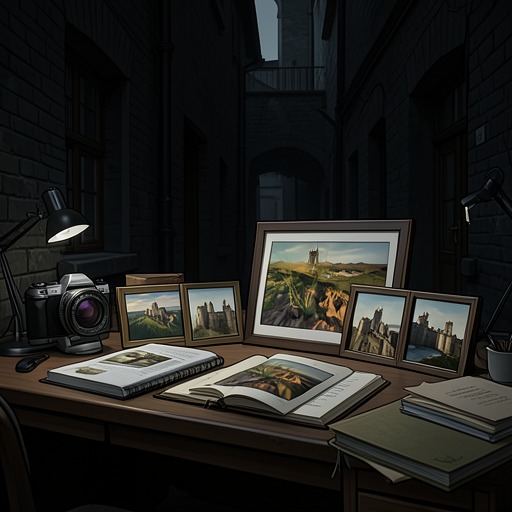
In conversation there, Charlie admits taking Ronnie’s camera. His direct acknowledgment confirms his role in the camera’s disappearance, though it does not by itself explain every circumstance surrounding the theft. Rebus also reconstructs the significance of Charlie’s arrival at Ronnie’s house. Ronnie’s body had been moved from the bedroom to the stairs; Rebus reasons that the person moving it heard Charlie arrive and hid elsewhere in the house until he had gone. Charlie’s jaw drops at the deduction, and he then weeps. The reaction registers the force of learning that the unseen person had been present throughout his visit. Rebus calls him lucky, distinguishing the danger he encountered from proof that he was responsible for the body’s movement.
Identity, Suspicion, and Narrative Role
Charlie’s room makes his divided affiliations visible without resolving them. After Brian McCall has emptied a bag, books remain scattered across the floor, but Rebus ignores the clutter and examines the desk. The room has none of the posters or postcards that might have made it legible as a student’s room; its identity has been left suspended. Rebus reads this as Charlie’s wish to avoid looking like a student among his drop-out friends or a drop-out among his student friends, and calls him a chameleon as well as a tourist. That judgment echoes the earlier interview: Charlie’s claim to belong in Pilmuir and Rebus’s refusal to accept it are part of a wider uncertainty over where he fits.
The essay on Magick remains Rebus’s principal interest among the papers. His examination of the desk turns up nothing to suggest that Charlie is distributing drugs, so the evidence does not support treating the occult essay as proof of criminal activity. Instead, Charlie’s academic interest in demonism, the pentagram at Ronnie’s house, and his presence in the investigation are separate threads that Rebus must test rather than collapse into one conclusion. Charlie is therefore useful to the inquiry partly because he sits at the junction of its clues, and partly because suspicion can attach itself too readily to signs that are unusual but not conclusive.
Charlie’s role also sharpens the contrast between being classified and being known. To Rebus, he is at once student, tourist, and chameleon; to Poole, he is the first-name-only author of an occult essay; in Pilmuir, he claims a belonging that Rebus disputes. His admissions about the camera and his presence at Ronnie’s house give those identities real investigative consequences, but the evidence also limits what can be concluded: he is involved in the chain of events, yet Rebus’s reconstruction places the body-mover as another person, hidden in the house when Charlie arrived.